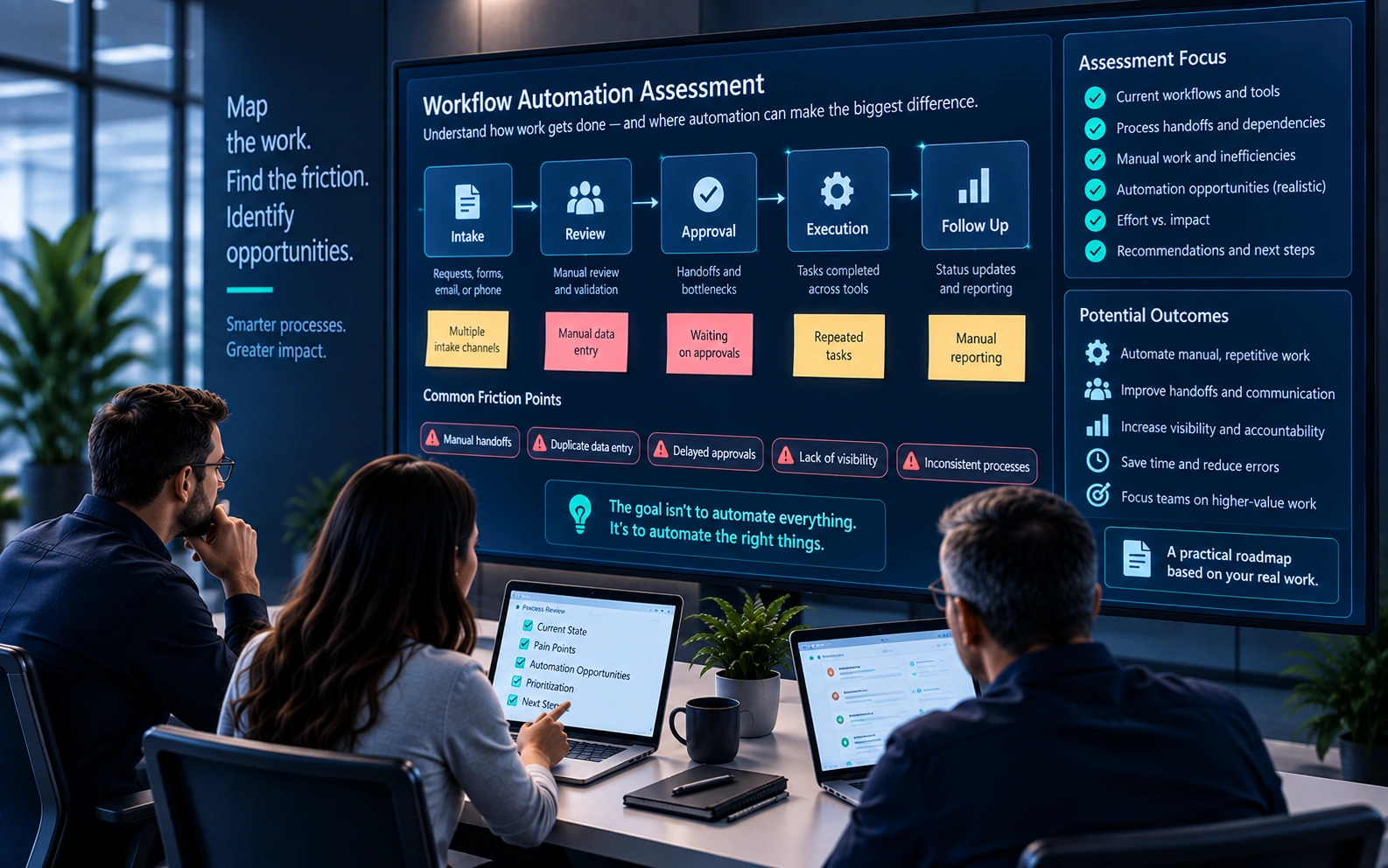
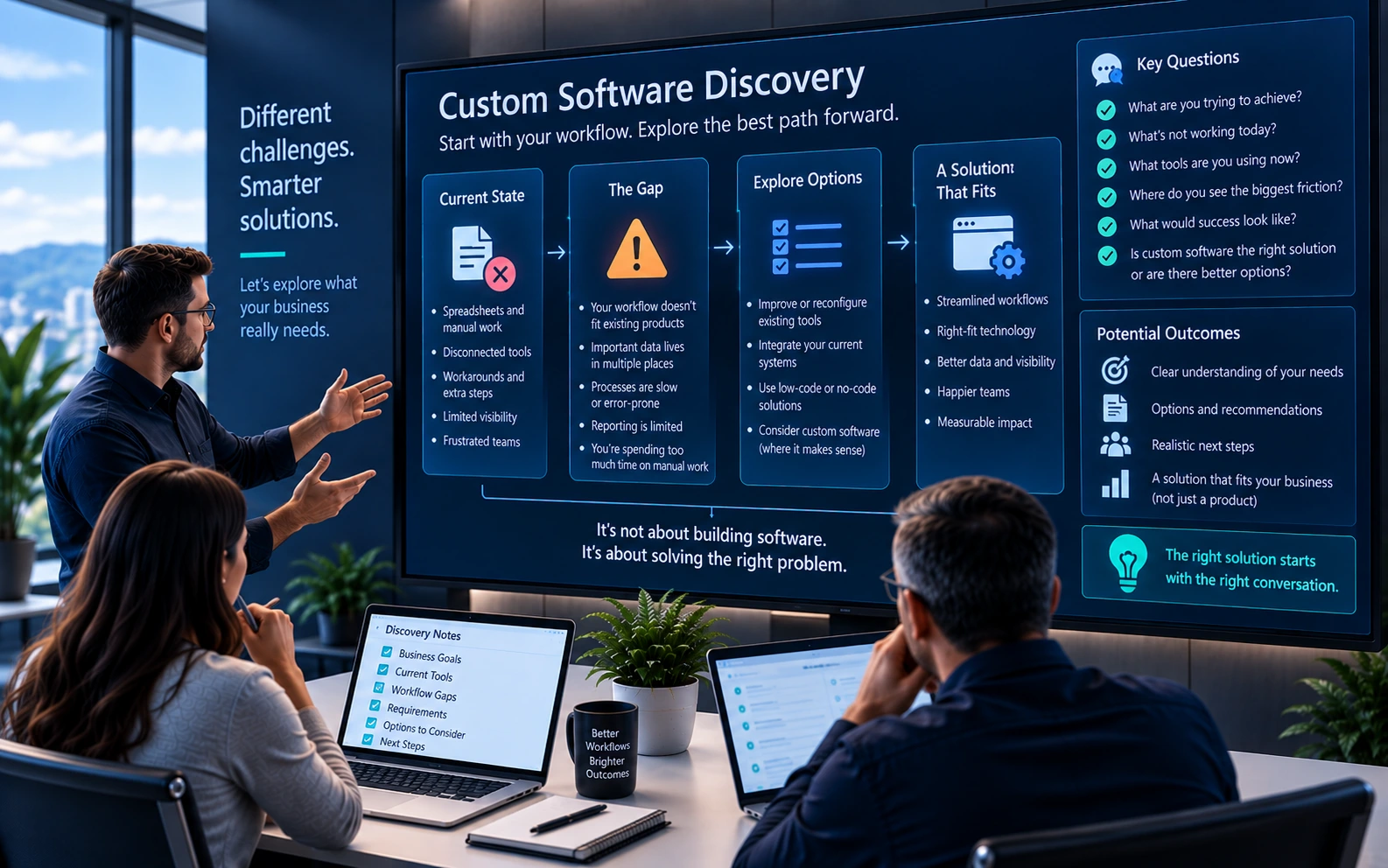
Custom software has a reputation for being expensive and slow, and existing products have a reputation for never quite fitting. Both reputations are partly deserved. The useful question is not whether to build or buy in general, but whether a specific problem justifies building.
Try configuration and integration first
Many gaps that look like they need custom software can be closed by configuring the products already in place, adding a Power Platform app, or connecting two systems so information does not have to be re-entered. These options are faster to deliver and easier to maintain. They should be ruled out deliberately before development begins.
Signs that building makes sense
Custom software tends to earn its cost when the process is central to how the organization delivers value, when the workflow has rules and exceptions that products force people to work around, when several systems need to be brought together in a way no single product supports, or when the organization needs control over how the capability evolves.
If people are maintaining an important process through spreadsheets, email, and manual reconciliation because nothing on the market fits, that is often a sign.
A rewrite is not the default
When an existing application is the problem, replacing it entirely is rarely the only option. Extending it, wrapping it with a better interface, integrating it with newer systems, or modernizing the parts that cause the most friction can deliver value sooner and with less risk than starting over.
Build for the environment it will live in
New software should work with the identity, data, collaboration, and cloud platforms the organization already runs. That means signing in with existing accounts, respecting existing permissions, fitting into existing support processes, and being hosted somewhere the organization can operate.
Plan for life after launch
Software needs to be supported, secured, and changed as the business changes. Before development starts, it should be clear who owns the application, who will administer it, how issues will be handled, and how improvements will be prioritized. Custom software that nobody can maintain becomes the next legacy system.