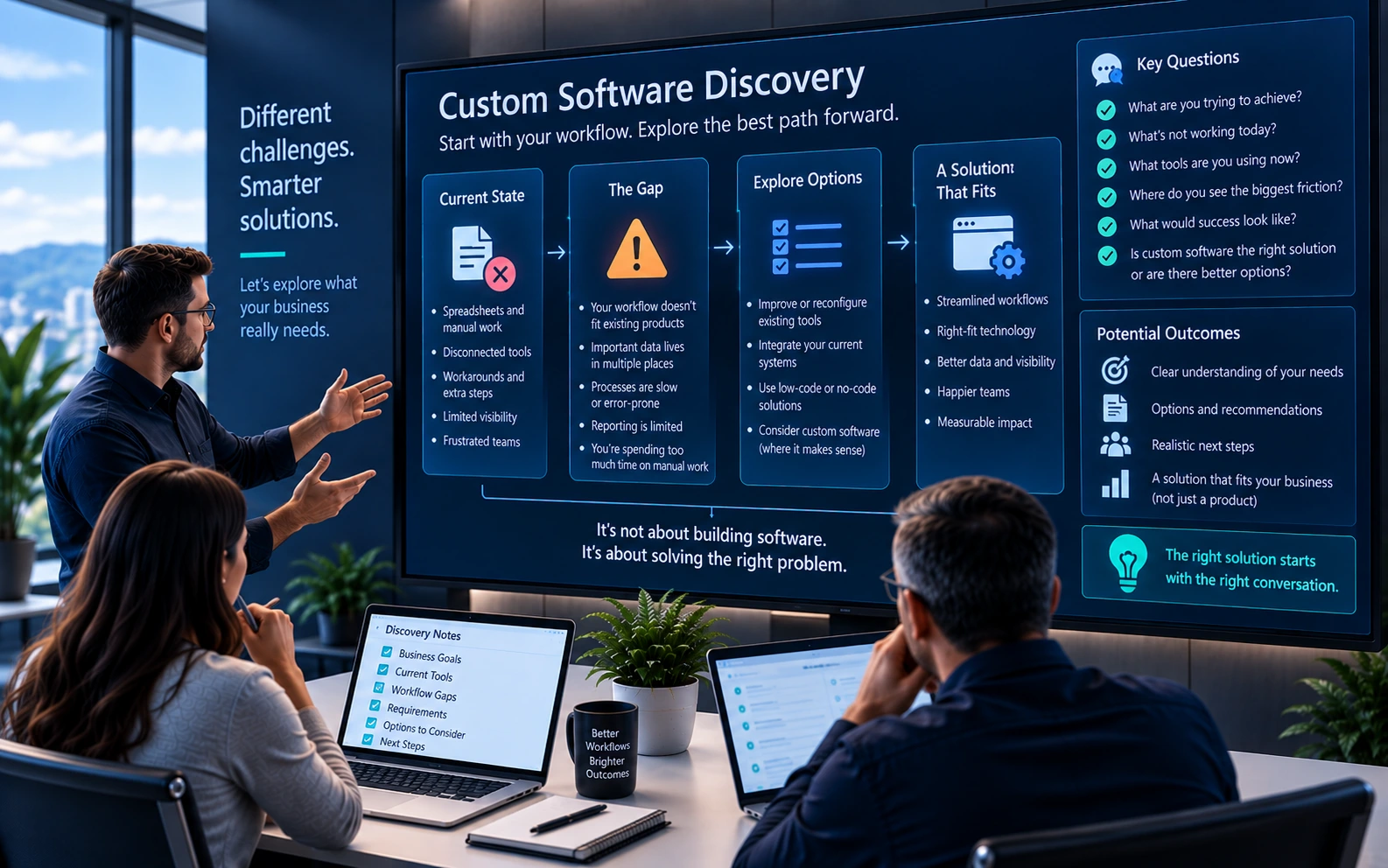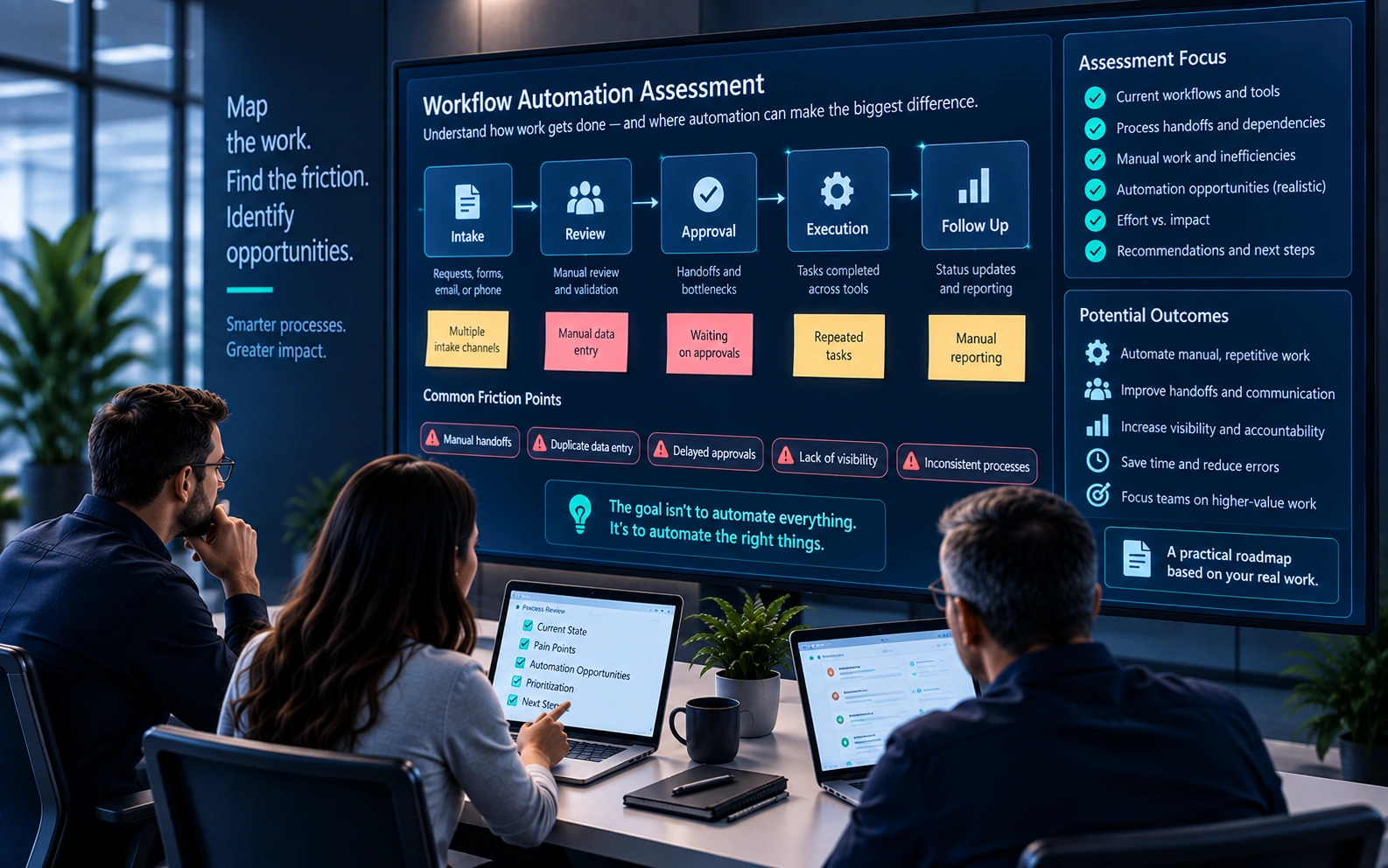
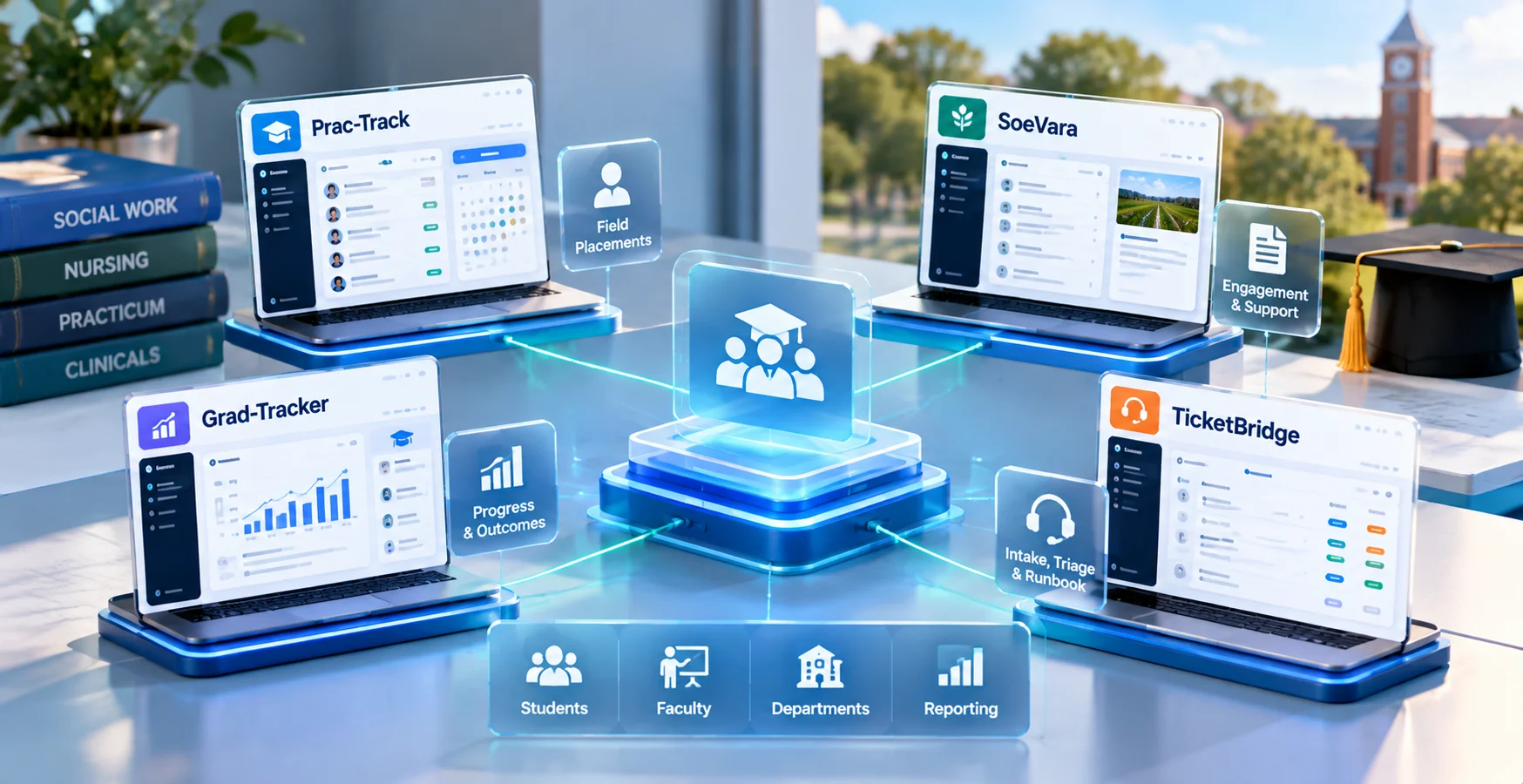
In many higher-education programs, field experience, practicum, and graduate outcomes are managed with whatever tools were available when the requirement appeared: a spreadsheet for placements, a form for hours, an email thread for evaluations, and a survey tool for alumni. Each tool works on its own. Together they create a lot of manual effort, especially when a review or accreditation cycle arrives.
It is operational work, every term
Placing students, confirming requirements, collecting hours, gathering evaluations from site supervisors, and tracking documents are not occasional tasks. They happen continuously, involve people inside and outside the institution, and have deadlines that affect students' progress. Systems supporting this work should be designed for daily use, not only for producing a report at the end.
Many roles, different needs
Students, faculty, program coordinators, site supervisors, and administrators all interact with the same records, but they need different views and different permissions. A student needs to submit hours and see what is outstanding. A coordinator needs to see every placement and what is missing. A site supervisor needs to complete evaluations without learning an entire system. Role-based access is a practical requirement, not a nice-to-have.
Evidence should be captured as the work happens
The most time-consuming part of accreditation and program review is often reconstructing evidence after the fact. When evaluations, hours, and outcomes are recorded in a structured way throughout the term, reporting becomes a matter of drawing from the record rather than assembling it from scattered sources.
Connect the stages
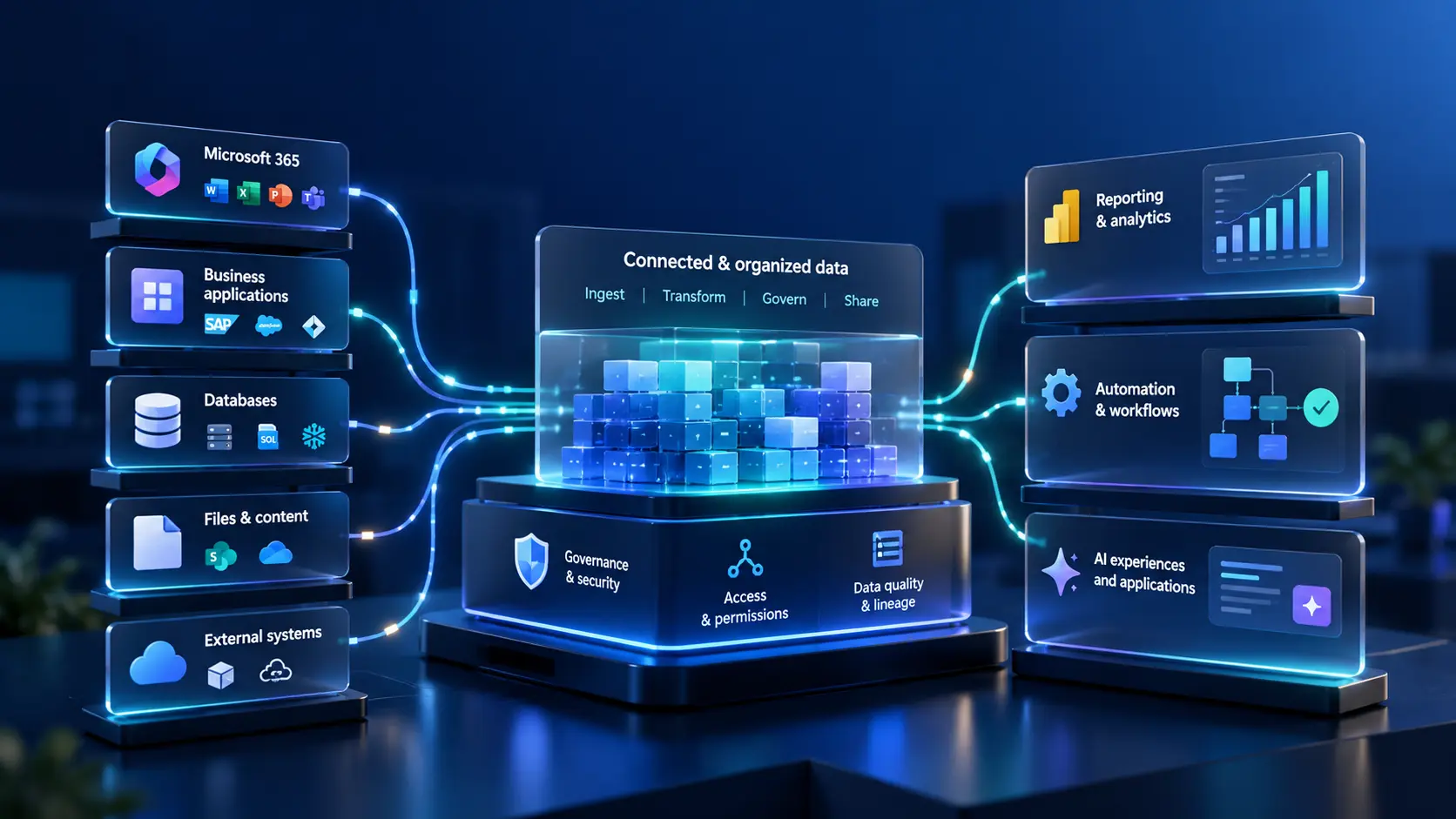
Field experience and practicum records say something about how students were prepared. Graduate outcomes say something about what happened next. When those stages are managed in disconnected tools, it is hard to see the relationship between them. Connecting them — even gradually, one workflow at a time — gives programs a clearer picture of their own impact.
Treating these systems as operational infrastructure, with clear ownership, sensible access, and records that are kept current, makes the work easier for everyone involved and the reporting far more reliable.